 Sentinel Guard
Service
Bee Removal
When bees establish a colony on your property, the situation requires a measured response that balances your family's safety with environmental responsibility. These vital pollinators deserve our respect, yet their presence near high-traffic areas, play spaces, or building structures can pose legitimate concerns for homeowners.
Our bee removal service focuses on humane live relocation whenever possible, carefully extracting colonies and transferring them to appropriate apiaries where they can continue their essential work. This approach reflects a deeper understanding of ecological balance—one that protects your home while honoring the irreplaceable role bees play in our local ecosystem.
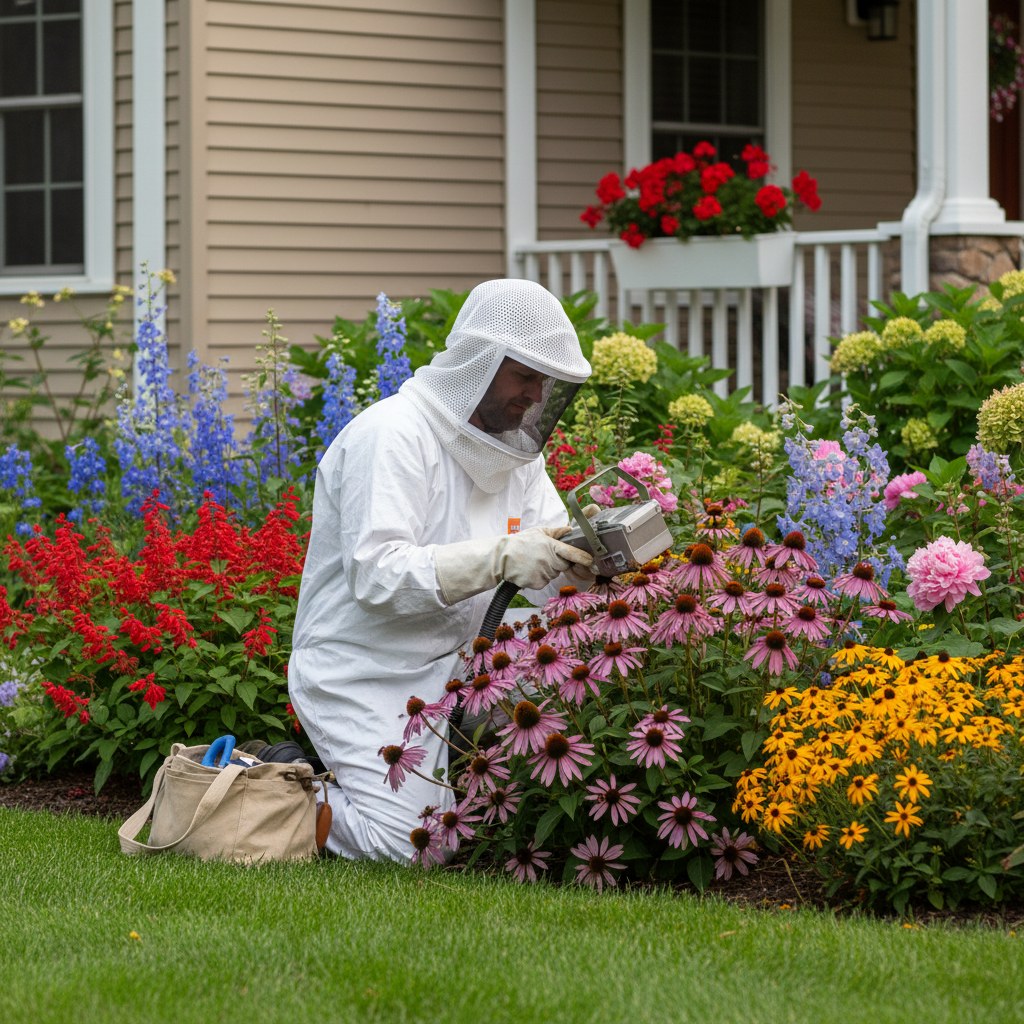
What Bee Removal Entails
Professional bee removal begins with a thorough assessment of the colony's location, size, and species. We determine whether bees have established themselves within wall voids, attics, chimneys, trees, or other structures on your property. This evaluation informs our removal strategy, as different locations and colony maturity levels require distinct approaches. Understanding the colony's behavior patterns and entry points allows us to plan an extraction that minimizes stress to the bees and disruption to your home.
The removal process itself involves carefully accessing the colony, safely relocating the queen and worker bees, and removing honeycomb to prevent future pest attraction or structural damage. We seal entry points and treat affected areas to discourage re-establishment. Throughout this work, we prioritize non-lethal methods, partnering with local beekeepers whenever feasible to give colonies a second life in managed hives. Only in cases where aggressive Africanized bee genetics or extreme safety risks are present do we recommend alternative approaches.
The Benefits of Professional Bee Removal
Safety First
Professional removal eliminates the risk of defensive stinging incidents that can occur when untrained individuals attempt DIY extraction.
Structural Protection
Complete honeycomb removal prevents honey seepage, mold growth, and secondary pest infestations that damage building materials.
Environmental Responsibility
Live relocation preserves pollinator populations that support local gardens, agriculture, and natural ecosystems.
Lasting Solutions
Proper exclusion work and entry point sealing prevent future colonies from establishing in the same location.
Peace of Mind
Expert handling means the job is completed safely and thoroughly, without the anxiety of managing stinging insects yourself.
Our Bee Removal Process
- Detailed Inspection We identify the bee species, locate the colony's full extent, assess structural involvement, and determine the safest removal method for your specific situation.
- Safe Extraction Using specialized equipment and techniques, we carefully remove the colony, prioritizing live relocation to apiaries while minimizing property disruption and ensuring family safety.
- Honeycomb Removal We extract all comb, brood, and honey from the affected area, thoroughly cleaning to eliminate attractants that could draw new swarms or secondary pests.
- Exclusion & Prevention Entry points are professionally sealed, and we provide guidance on landscape and structural modifications that reduce the likelihood of future bee establishment.
Who Needs Bee Removal Services
Bee removal becomes necessary when colonies establish themselves in high-traffic areas, within building structures, or anywhere their presence creates safety concerns—particularly for households with children, pets, or family members with bee sting allergies. If you notice consistent bee activity around eaves, vents, chimneys, or hear buzzing within walls, professional assessment prevents small colonies from growing into major infestations.
Property owners often discover established colonies during renovations, seasonal maintenance, or after noticing increased bee traffic near specific areas. Spring and early summer bring peak swarming activity, when bees seek new nesting sites. Acting promptly when you first notice unusual bee activity prevents colonies from becoming deeply entrenched in structures, making removal more complex and costly. Whether you're concerned about immediate safety risks or want to address a colony before it causes structural issues, professional removal offers the most responsible solution.
Common Questions
How quickly can you remove a bee colony?
Timeline depends on colony location and accessibility. Exposed swarms can often be relocated within hours, while colonies inside walls or structures may require one to two days for complete extraction and cleanup. We prioritize thorough removal over speed to ensure no bees or honeycomb remain that could create future problems.
Will removing bees damage my home?
We use minimally invasive techniques and repair any access points we create during removal. Most extractions require only small openings that are professionally patched and sealed. The alternative—leaving bees in place—typically causes far greater structural damage over time from honey, wax, and moisture accumulation.
Are all bees relocated alive?
We relocate colonies alive whenever safely possible, working with local beekeepers who welcome healthy hives. However, certain situations involving aggressive bee behavior, significant structural entanglement, or public safety concerns may require alternative approaches. We assess each situation individually and discuss options with homeowners.
What prevents bees from returning after removal?
Complete honeycomb removal eliminates the pheromone signatures that attract scout bees to former colony sites. We thoroughly seal all entry points and treat areas to discourage re-establishment. These exclusion measures, combined with removing all traces of the previous colony, provide long-term prevention against future bee problems in the same location.